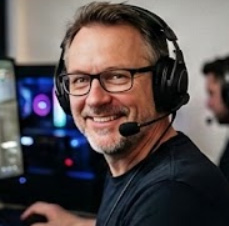

- XoTiC Benches Himself: What Happened?
- NRG's Recent Form and Budapest Major Run
- Why Did XoTiC Step Down?
- Community Reaction and Speculation
- Impact on NRG and the NA CS2 Scene
- Money, Majors, and Player Businesses
- CS2 Skins Economy and Player Side Hustles
- What XoTiC's Story Means for Future Pros
- Final Thoughts on XoTiC and NRG
XoTiC Benches Himself: What Happened?
North American Counter-Strike 2 fans woke up to a shock: Zack "XoTiC" Elshani, one of the region's most promising AWPers, has voluntarily moved himself to the bench on NRG. The move doesn't come after a slump, a roster conflict, or a transfer leak. Instead, XoTiC says he's stepping back to focus on "running multiple businesses".
NRG quickly announced that Josh "oSee" Ohm will stand in for XoTiC, filling the sniper role on a roster that has just punched its ticket to the StarLadder Budapest Major 2025. On paper, that makes the timing of this decision even more puzzling. Most players grind for years just to reach a Major. XoTiC gets there, puts up a strong rating, and then decides to step away.
It's an unusual situation in modern esports, where the typical storyline is burnout, poor form, or a more lucrative offer from another organization. Instead, we have a player willingly leaving the spotlight and one of the most hyped North American lineups to focus on life outside the server.
NRG's Recent Form and Budapest Major Run
To understand why the community is so stunned, you need to look at where NRG is right now in the CS2 landscape. This isn't a roster on the decline; it's a team on the rise.
NRG's Major Qualification Run
NRG recently qualified for the StarLadder Budapest Major 2025, one of the biggest tournaments on the CS2 calendar. During that qualifier run, they didn't just scrape by. They knocked off heavyweights like FaZe Clan and Ninjas in Pyjamas, and did it while playing with a coach stand-in.
That sort of performance instantly raised expectations. For North American CS2, where international success has been inconsistent since the glory days of teams like Cloud9's Boston Major roster, NRG's breakthrough gave fans fresh hope. And at the core of that storyline was XoTiC, the AWPer many pegged as the region's next star.
XoTiC's Individual Performance
Statistically, XoTiC backed up the hype. Over the three months leading up to this decision, he posted around a 1.12 rating while wearing the NRG jersey. That's not just serviceable—it's strong, especially for a player still relatively fresh to the top tier.
His first appearance at a Major-level event only reinforced that impression. For a player who had previously drifted in and out of the scene, this run looked like the start of a long-term Tier 1 career. That's why so many fans and analysts used terms like "most promising NA AWPer" when talking about him.
Why Did XoTiC Step Down?
Usually, when a player benches himself, the explanation is straightforward: mental fatigue, internal conflicts, lack of motivation, or the desire to join another team. XoTiC broke that pattern entirely.
Balancing Competitive CS and Multiple Businesses
In his statement, shared via NRG's official CS2 account, XoTiC explained that he has been trying to juggle competitive Counter-Strike with running multiple businesses. According to him, splitting his focus meant neither side was getting the attention it truly needed.
That's a critical point. Tier 1 esports isn't part-time work. Teams practice for long hours daily, scrim, VOD review, travel for events, and do sponsor content on the side. It's a lifestyle that doesn't leave much room for complex side ventures.
If XoTiC is genuinely managing several businesses, he's effectively living a dual-career life. At some point, something has to give. For him, that 'something' appears to be professional CS2—at least for now.
Is It Actually About Money?
Whenever a player mentions "businesses" in a departure statement, the community immediately wonders: Is this about money?
Majors come with serious financial upside, especially through sticker sales. Players on Major rosters can earn six-figure sums purely from in-game items tied to the event. It's not uncommon for younger pros to have their entire financial year shaped by one successful Major run.
So for XoTiC to turn away from a potential Major payday implies one of three things:
- His businesses are already making enough to compete with—or exceed—Tier 1 CS2 income.
- He values long-term stability and ownership over grinding for short-term esports income.
- He feels that trying to do both would eventually ruin his performance and possibly his business prospects.
From the outside, it's impossible to know which mix of these factors is driving his decision, but it clearly isn't a standard benching story.
Community Reaction and Speculation
The announcement didn't just raise eyebrows—it generated a wave of confusion and memes across social media and discussion forums. Many fans felt like they had finally seen XoTiC reappear at a top level, only to watch him vanish again just as quickly.
Social Media Commentary
Commentators and content creators have labeled XoTiC an "enigma". It's easy to see why:
- He disappears from serious competition for years.
- He pops up, joins NRG, and shows real promise.
- He qualifies for a Major and posts solid numbers.
- He immediately steps back to run his businesses.
To casual viewers, this looks like the opposite of the typical esports career curve. Most players struggle to build a safety net outside of the game; XoTiC seems to be doing the opposite—building his life outside esports so strongly that he can step away from one of the best situations a North American player can ask for.
HLTV and LinkedIn Digging
Of course, the community wasn't going to just accept "multiple businesses" and move on. Users on HLTV.org went hunting for clues. Some claimed to have found a LinkedIn profile under his name, possibly pointing toward e-commerce work.
Whether that profile is actually his or just an internet red herring is still unclear. Until XoTiC himself shares more detail, there's a lot more speculation than certainty. But what's undeniable is that he's not following the traditional playbook for esports pros who hit their peak in their early-to-mid 20s.
Impact on NRG and the NA CS2 Scene
XoTiC's decision isn't just a personal story—it directly affects NRG's trajectory and the broader North American CS2 ecosystem.
oSee Steps Into the AWP Role
To fill the gap, NRG have turned to oSee, a name that should be familiar to anyone who followed the later years of CS:GO and the early CS2 era. He's a capable AWPer with international experience and has already proven he can hang with Tier 1 talent.
However, switching your primary sniper is never a trivial adjustment. AWPers shape the team's playstyle, tempo, and comfort on certain maps. Even if oSee fits well on paper, there will be a period of adaptation.
Key questions facing NRG now include:
- Can they maintain the same aggressive looks and setups they used with XoTiC?
- Will oSee bring a different philosophy on certain maps that demands structural change?
- How quickly can the team build synergy before the Budapest Major?
Missed Potential or Smart Life Choice?
From a purely competitive standpoint, it's tempting to label this a missed opportunity. If XoTiC was already performing at a high level while dividing his focus between pro play and business, it's fair to ask:
- How good could he have been if he had gone all-in on CS2?
- Could NRG have become a consistent international contender with him fully committed?
On the other hand, esports is notorious for short careers and unstable income. From a life-planning perspective, XoTiC might be making a smart, future-oriented choice—building assets and ownership instead of relying solely on prize money and salaries that can disappear with a single roster shuffle.
Money, Majors, and Player Businesses
One of the biggest talking points surrounding this story is how it intersects with the financial realities of esports. For all the hype around big prize pools, most pro players don't instantly become rich, and long-term stability isn't guaranteed.
The Power of Major Sticker Revenue
Majors don't just offer prize money; they plug directly into the CS2 item economy. Team and player stickers, capsules, and related digital items can generate huge revenue for both organizations and players. It's well documented that some pros have made six-figure payouts from a single Major run just via sticker sales.
That makes XoTiC's timing even more surprising. Walking away before one of the biggest financial opportunities in CS2 suggests that his business ventures must either:
- Already be producing strong income, or
- Require full focus right now to scale to that level.
Esports Entrepreneurship and Side Hustles
Over the last few years, more pros have started looking beyond the server for new revenue streams:
- Streaming and content creation
- Coaching and consulting for up-and-coming players or teams
- Merchandise and personal brands
- Investments in crypto, stocks, or startups
- Involvement in gaming-related businesses, including marketplaces and digital goods platforms
Whatever XoTiC's exact business lineup looks like, his move reflects a growing trend: players want ownership and long-term control over their income, not just short-term contracts and prize splits.
CS2 Skins Economy and Player Side Hustles
Any conversation about money in CS2 naturally leads to the skin economy. While we don't know whether XoTiC is involved in that space, it's one of the most common ways players and gamers explore business opportunities around the game they love.
How the CS2 Skins Market Works
CS2 skins are more than just cosmetic upgrades—they're digital assets with real-world value. Players buy, sell, and trade them across various platforms, turning their inventories into miniature portfolios.
Marketplaces like cs2 skins hubs make it easy to:
- Instantly sell unwanted items for real money.
- Pick up budget-friendly play skins for your favorite weapons.
- Flip certain items based on meta shifts, collection popularity, or hype around events.
As CS2 continues to grow, the skin economy becomes an ever larger part of the ecosystem, and it's a natural area for entrepreneurial-minded players to explore.
UUSkins and Safe Skin Trading
For players who don't want to deal with the risk and complexity of peer-to-peer trades, specialized platforms provide a smoother experience. For example, csgo skins trading via marketplaces like UUSkins offers:
- Instant cash-out options if you want to convert skins into money rather than hold them.
- A curated marketplace where items are organized by price, rarity, and popularity.
- Reduced scam risk compared to direct random trades with strangers.
For casual gamers, this means you can safely upgrade your inventory or offload high-value drops. For more business-minded players, it's part of a larger ecosystem of trading, collecting, and flipping items around key events like Majors and new case releases.
Skins, Side Businesses, and Pro Players
Many professional and semi-professional players are already deeply embedded in this economy, even if they don't talk about it publicly:
- Some hold rare knives, gloves, or stickers as long-term investments.
- Others flip items more actively, predicting which skins will jump in price after patches, meta shifts, or new case drops.
- Content creators often build their brand around cases, unboxings, and trading.
While there's no confirmation that XoTiC is specifically involved in skin trading, his choice to step away for "multiple businesses" fits into a wider pattern: the CS2 ecosystem isn't just about matches anymore. It's also about digital items, marketplaces, content, and services that orbit the core game.
What XoTiC's Story Means for Future Pros
Beyond the short-term impact on NRG, there's a much bigger conversation here about what it means to be a pro player in 2025 and beyond.
The End of One-Dimensional Careers?
For years, the expectation was simple: if you made it to Tier 1, you live and breathe the game. Everything else could wait until retirement. But as esports matures, more players are realizing that:
- Careers can end overnight due to injuries, burnout, or roster changes.
- Organizations hold a lot of power over contracts, buyouts, and roles.
- Without outside income or assets, players can be left financially vulnerable when their peak is over.
In that context, XoTiC’s decision looks less like an anomaly and more like an early signal of where things might be heading. Future pros might increasingly treat esports as just one pillar of their life, not the entire foundation.
Balancing Passion and Security
There’s also a human angle here. Many players genuinely love the game and the grind, but they also want:
- Financial security beyond age 30.
- The ability to take breaks without their career collapsing.
- Opportunities to build something that belongs to them, not just an org.
For younger aspiring pros, XoTiC’s story is a reminder that:
- Grinding ranked and scrims is important, but so is understanding business, branding, and long-term planning.
- You don't have to choose between being a gamer and being an entrepreneur—though doing both at the same time at Tier 1 level is obviously challenging.
Can Dual Careers Work in Esports?
The big question his decision raises is whether dual-career paths are compatible with modern esports. Right now, the honest answer is: only rarely.
Tier 1 play demands:
- Travel across multiple continents each year.
- Full-time practice, review, and theory work.
- Commitment to bootcamps, media days, and sponsor obligations.
Running serious businesses demands:
- Constant communication with partners, staff, or suppliers.
- Strategic decision-making and planning.
- Time to learn, experiment, and adapt to markets.
Trying to do both at a high level is like trying to play two esports at once. XoTiC’s benching might simply be him acknowledging a truth many players quietly feel: there’s a limit to how much you can split your focus before something breaks.
Final Thoughts on XoTiC and NRG
XoTiC benching himself from NRG’s active CS2 roster is one of the most unconventional moves we've seen in recent North American esports history. Instead of following the usual cycle of team swaps and role changes, he's choosing to invest his time and energy into "multiple businesses" while still at what appeared to be the peak of his career.
For NRG, it's a curveball—losing a rising AWPer just before a Major is never ideal. Bringing in oSee softens the blow, but the team will need to quickly rebuild synergy and confidence heading into Budapest.
For the wider CS2 community, this story highlights a few key realities:
- Esports careers are short, volatile, and demanding.
- Players increasingly want control over their financial future, whether through businesses, content, or involvement in ecosystems like the skin market.
- The line between "gamer" and "entrepreneur" is getting blurrier every year.
Whether you see XoTiC’s decision as a missed competitive opportunity or a wise life choice probably depends on how you view the esports industry as a whole. But one thing is certain: in an era where digital economies—from Major stickers to CS2 skins platforms like UUSkins—play a huge role in the scene, stories like this are only going to become more common.
For now, XoTiC remains something of a mystery: the AWPer who came back, proved he belonged, and then walked away to chase success on a different battlefield.