
- A $1 Million CS2 Dream: Why One Owner Keeps Spending
- Who Is Shoke and What Is CYBERSHOKE?
- CYBERSHOKE CS2 Roster Overview
- How the $1 Million Was Spent
- Heavy Losses and Where the Money Comes From
- Why Running a CS2 Team Is So Expensive
- Stickers as the Endgame: The Major Dream
- Lessons for Future Esports Owners and Players
- How CS2 Skins and the Economy Tie Into Projects Like CYBERSHOKE
- Final Thoughts on the CYBERSHOKE Story
A $1 Million CS2 Dream: Why One Owner Keeps Spending
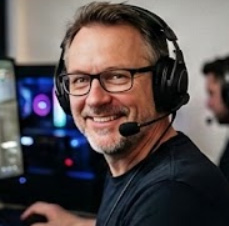
Most CS2 fans dream about hitting a crazy flick, pulling a clutch on LAN, or unboxing a life-changing knife. Erik “Shoke” Shokov, a Russian Counter-Strike 2 YouTuber, set his sights on something very different: building his own professional team and chasing Major stickers – even if it costs him close to $1 million.
Over roughly two and a half years, Shoke has openly revealed that he has poured $942,675 into his CS2 project, CYBERSHOKE Esports. For a roster that still sits in the tier-2/3 range of competition, that number sounds insane at first glance. Yet his transparency gives a rare, honest look into just how expensive it is to run a serious CS2 team in 2025.
This article breaks down who Shoke is, how CYBERSHOKE operates, where the money goes, how much he is losing, and why he says he will keep going until he sees his team immortalized with in-game Major stickers. Along the way, we will also look at how the wider CS2 economy – from esports to cs2 skins trading – connects to projects like his.
Who Is Shoke and What Is CYBERSHOKE?
Erik “Shoke” Shokov is not a traditional esports organization owner backed by a massive venture capital fund. He is first and foremost a content creator, with more than 1.6 million subscribers on YouTube, primarily in the CIS Counter-Strike community.
From there, he built CYBERSHOKE – a training and community platform for CS2 players. CYBERSHOKE operates over 1,200 public and private servers worldwide, offering aim maps, retake servers, warmup modes, and other tools that competitive players use to improve. The brand already had a solid footprint in the scene long before the team went pro.
Creating a professional roster under the same name was a natural next step. It gave CYBERSHOKE:
- Brand visibility in official tournaments and broadcasts.
- Storytelling content for Shoke’s YouTube channel.
- Aspirational value for users of the CYBERSHOKE training platform.
- New revenue and sponsorship opportunities linked directly to performance and exposure.
Fast-forward to today, and the investment has pushed the team up to around #41 in the HLTV world rankings – impressive for a new org, but still a long way from stable tier-1 status.
CYBERSHOKE CS2 Roster Overview
CYBERSHOKE fields a fully professional CS2 lineup with players drawn from the CIS region. While the exact roster can change over time due to transfers and form, the core lineup highlighted in Shoke’s breakdown includes:
- Ilya “FenomeN” Kolodko
- Denys “notineki” Kalachev
- David “bl1x1” Stepanyants
- Aleksandr “glowiing” Matsiyevich
- Daniil “alpha” Demin (on loan)
- Stepan “brain” Sivoronov (coach)
This is not a lineup of global superstars with Major MVPs, but it is a serious, salaried roster that competes in online cups, qualifiers, and LANs. For fans used to seeing only the top eight teams at Majors, it is easy to underestimate how much money it takes just to keep a roster of this level running.
Between salaries, accommodations, travel, and support staff, a “tier-3” team can still cost as much as a traditional small business. Shoke’s financial breakdown shows that clearly.
How the $1 Million Was Spent
Instead of hiding behind vague statements about “high costs”, Shoke released a detailed breakdown of CYBERSHOKE’s spending from mid-2023 through 2025. The numbers reveal exactly where that nearly $1 million went.
Salaries and player compensation
The biggest cost by far is player and staff pay:
- Salaries & compensation: $504,411
That figure includes:
- Player monthly salaries.
- Coach compensation.
- Potential performance bonuses or extra payments around certain events.
For context, this is already on par with some mid-level traditional sports clubs. Even if individual monthly salaries are modest compared to tier-1 stars, five players plus a coach, over multiple years, adds up extremely quickly.
Player buyouts and transfers
Competitive Counter-Strike is a constantly shifting landscape. To stay relevant, organizations must sign promising talent, buy contract rights, and sometimes pay to free players from their previous teams.
- Player buyouts: $181,700
That is money spent purely to acquire the right to use certain players; it does not include their salaries afterward. For a tier-3 project, spending nearly $200,000 on buyouts signals a strong belief that the roster could climb further up the rankings with the right mix of talent.
Team house, bootcamps, and travel
CS2 might be online-friendly, but serious teams still rely heavily on in-person environments to build synergy, run intensive practice, and prepare for big events. CYBERSHOKE invested heavily here as well:
- Team house rent: $126,625
- Bootcamps: $48,568
- LAN travel: $19,000
Team houses allow players to live, train, and review demos together under one roof, which can massively boost development – especially for younger talents. Bootcamps, often staged right before key qualifiers or LAN events, tighten teamwork and communication under pressure.
Compared to the salary numbers, these logistics costs may look smaller, but they are still substantial. A single international LAN appearance can require flights, hotels, visas, and local transport for an entire team and staff.
Legal, taxes, and basic operations
Running an esports team is not just Discord servers and scrims. There is a full business structure behind the scenes:
- Taxes & legal: $49,040
- Jerseys and branding: $8,921
- Psychologist: $4,400
Legal and tax costs cover contracts, compliance, accounting, and dealing with international regulations. Jerseys and branding are essential for sponsors, LAN appearances, and maintaining a professional image. The investment in a sports psychologist highlights how seriously CYBERSHOKE treats performance and mental resilience – something many fans do not realize teams pay for.
Total investment so far
When everything is added together, Shoke calculates that he has invested:
- Total spent: $942,675
That figure is approaching the “$1 million” mark he references across his content. For a team that still plays mostly under the “tier-3” label, this is a staggering amount of money and a powerful example of just how capital-intensive modern esports has become.
Heavy Losses and Where the Money Comes From
No serious business discussion stops at gross spending. Shoke also shared how CYBERSHOKE has done financially year by year. The result is a brutally honest picture: the project is firmly in the red.
Yearly financial results
According to his public breakdown, CYBERSHOKE’s esports side posted the following results:
- 2023: Profit of $21,185
- 2024: Loss of $43,147
- 2025: Loss of $300,603
Across this period, the combined net result is a loss of more than $322,000, with 2025 accounting for the majority. That means that even though there were moments of profitability, especially early on, the overall picture is clearly negative.
Where CYBERSHOKE makes money
The upside is that not all of the $942k came out of Shoke’s pocket directly. CYBERSHOKE generates revenue from multiple sources:
- Sponsorships: brand deals tied to the team, content, and platform exposure.
- Content monetization: YouTube videos, streams, and other media involving the roster.
- Premium subscriptions: paying users on the CYBERSHOKE training and server platform.
- Community support: possibly merch, special events, and fan-driven purchases influenced by the team’s existence.
On top of that, the team acts as a massive marketing vehicle for the CYBERSHOKE platform itself. Increased awareness, player traffic, and long-term brand value are harder to quantify but very real.
Still, even with all those revenue streams, the direct esports operation is losing money. That puts CYBERSHOKE in the same boat as many orgs worldwide: chasing trophies and relevance while hoping the long-term payoff of brand growth, bigger deals, and possibly Major-level success will justify today’s losses.
Why Running a CS2 Team Is So Expensive
From the outside, spending almost $1 million on a tier-3 CS2 team might seem irrational. But taken piece by piece, the costs line up with broader industry standards.
The competition for talent
Good riflers, AWPers, IGLs, and coaches are in high demand. Even in regions like CIS where the cost of living is lower than in North America or Western Europe, strong players know their value. Organizations compete with each other on:
- Base salary offers.
- Stability and contract length.
- Bootcamps and LAN opportunities.
- Support staff like analysts, managers, and psychologists.
That competition drives salaries and buyouts upward, especially for players who show promise in regional events or RMR qualifiers.
Infrastructure and player lifestyle
A professional team is not just five kids playing from home. To function at a high level, they need:
- Stable, low-latency internet and proper hardware.
- Structured practice environments with schedules and reviews.
- Physical health support: good sleep setups, nutrition, and sometimes gym access.
- Mental health support: psychologists and performance coaches.
Providing this in a team house and through recurring bootcamps costs real money. It also helps prevent burnout, conflict, and inconsistent performance – problems that can instantly kill a team’s momentum.
Unpredictable results and high risk
CS2 is a volatile scene. A few bad months, a meta shift, or internal issues can erase progress overnight. There is no guarantee of qualifying for lucrative events or long tournament runs. Meanwhile, the monthly bills continue.
Shoke’s willingness to keep spending despite losses underlines an important reality: for many owners, esports is a passion project first, a business second. They are willing to take heavy risks for non-financial rewards – especially in Counter-Strike, where Major appearances and stickers have a cultural weight that money cannot directly buy.
Stickers as the Endgame: The Major Dream
Unlike some orgs that focus on building a trophy cabinet, Shoke has been unusually clear about his true end goal: Major qualification and in-game stickers.
Why Major stickers matter so much
In Counter-Strike, qualifying for a Valve-sponsored Major usually means your team gets a set of team and player stickers added directly into the game. These stickers can then be:
- Purchased by players as part of sticker capsules.
- Applied to weapon skins for customization and flex.
- Traded or sold on the Steam Market and third-party platforms.
But beyond the economic angle, stickers are a form of immortality in CS2. A team that gets stickers will forever have their logo and players’ signatures living inside the game, even after rosters change or the org dissolves. For owners, players, and fans, that is an emotional milestone.
Shoke’s personal mission
Shoke has stated that he does not care about lifting Major trophies. His vision is simpler and more personal: get CYBERSHOKE stickers into CS2. Once that happens, he says he could “finally rest”, knowing the company he built is permanently connected to the game that shaped his career.
That perspective explains why he keeps pushing forward despite six-figure losses. For him, the project is not just a business, but a legacy play. The travel, bootcamps, and shared experiences with the team are a bonus; the stickers are the true finish line.
Lessons for Future Esports Owners and Players
For fans, Shoke’s transparency is entertaining and eye-opening. For aspiring team owners, investors, or even players, it is also a valuable case study.
Esports is not a guaranteed quick profit
Even with a big YouTube channel, a successful platform brand, and a globally recognized title like CS2, CYBERSHOKE is still losing significant money on its pro team. That shows:
- You should not enter esports expecting instant ROI.
- Longevity often requires deep pockets or multiple revenue streams.
- Passion is important, but it must be balanced with sustainable planning.
Some organizations survive because their owners treat them as marketing tools, hobbies, or long-term brand plays rather than short-term profit engines.
Transparency builds community trust
By publishing detailed financials, Shoke strengthens his relationship with fans. In an industry where many orgs shut down overnight with vague “financial restructuring” statements, this level of transparency is rare and refreshing.
For players and staff, transparent leadership also creates:
- Realistic expectations about salaries and budget changes.
- Clarity on what the org is aiming for (in this case, Major stickers).
- Stronger emotional investment from the community, which can translate into merch sales, viewership, and engagement.
Players should understand the business side
For aspiring pros, the CYBERSHOKE story is also instructive. Many players see only:
- Salaries hitting their bank accounts.
- Travel to LANs and bootcamps.
- New jerseys and brand deals.
Behind that is a complex financial machine that might be barely holding together. Understanding how much owners invest and risk can encourage players to:
- Act professionally and value long-term stability.
- Help with content, fan engagement, and sponsor obligations.
- Be realistic about their own market value at different stages of their career.
How CS2 Skins and the Economy Tie Into Projects Like CYBERSHOKE
The financial ecosystem around CS2 is not limited to teams and tournament prize pools. A massive part of the game’s economy flows through weapon skins, cases, and stickers. That broader market indirectly supports projects like CYBERSHOKE.
Skins, stickers, and esports funding
When you buy a Major sticker capsule or a viewer pass, a portion of that revenue goes to the participating teams and players. That means:
- Qualifying for a Major can become a huge financial boost for an org.
- Sticker sales can sometimes rival or even exceed prize money for mid-placing teams.
- Org exposure from stickers can attract sponsors, boosting long-term revenue.
This is one of the reasons Shoke is so focused on reaching a Major. Stickers are not just emotional trophies; they are also potential financial lifelines in a risky business.
Trading CS2 skins as part of the scene
Beyond official tournament stickers, the community-driven market for weapon skins is enormous. Many fans who follow tier-2 and tier-3 teams are also active traders, collectors, or occasional flippers on third-party marketplaces.
If you are one of those players who enjoys customizing your inventory or trading items, sites like cs2 skins marketplaces can be a major part of your CS2 experience. On these platforms, you can:
- Buy and sell skins more flexibly than on the Steam Market.
- Look for specific float values, patterns, or rare finishes that match your taste.
- Adjust your inventory to fit different loadouts or mood without waiting for lucky case drops.
While trading csgo skins originally started in CS:GO, the ecosystem has naturally continued into CS2, carrying over player habits, collections, and long-term investments.
How the skins economy reflects interest in esports
There is also a subtle feedback loop between esports and skins. When a team makes a deep run or a player becomes popular, demand for their stickers and associated skins often spikes. That means:
- A surprise tier-3 team qualifying for a Major can instantly become a hot commodity in the skins market.
- Fans show support not only by watching games but also by buying cosmetics tied to their favorite teams and players.
- The visibility of a team like CYBERSHOKE at big events could translate into measurable value inside the skins ecosystem.
For Shoke, reaching that stage would close the loop: the team that started as an expensive passion project would finally enter the part of CS2’s economy that can generate more stable, game-integrated revenue through stickers and fan purchases.
Final Thoughts on the CYBERSHOKE Story
Shoke’s CYBERSHOKE project is one of the clearest, most transparent examples of what it really costs to run a competitive CS2 team in today’s ecosystem. Nearly $1 million spent, more than $322,000 lost, and still no Major appearance yet – but the grind continues.
From a pure business standpoint, the decision to keep funding the team looks risky. From a human and cultural angle, it makes perfect sense. Esports has always been built on people who love the game enough to keep going long before it is rationally profitable. Shoke fits that mold perfectly: a creator-turned-owner chasing a legacy inside the game that changed his life.
Whether CYBERSHOKE eventually secures its Major stickers or not, the project already offers something valuable to the CS2 community:
- A honest, data-backed look at esports finances.
- A relatable story of passion, risk, and ambition.
- An example for other orgs and owners to communicate more openly with their fans.
For players watching from the outside, there are two main takeaways:
- If you dream of going pro, understand the infrastructure and investment behind your contract.
- If you simply love CS2, supporting the scene – by watching matches, engaging with content, or building your dream inventory through platforms like cs2 skins markets – helps keep the ecosystem alive.
The road to Major stickers is long, painful, and expensive. But as long as owners like Shoke are willing to walk it, CS2 will continue to have new stories, new teams, and new legends fighting their way into the game’s history.