
- StarLadder CS2 Budapest Major: A new era vibe
- fl0m's fan experience in Budapest
- Vitality vs FaZe: fl0m's conflicted prediction
- Valve Regional Standings explained
- Why CS2 finally feels fully connected
- CS2 skins, the economy, and uuskins.com
- What's next for CS2 esports after Budapest
StarLadder CS2 Budapest Major: A new era vibe
The StarLadder CS2 Budapest Major has quickly become one of those landmark events that people will reference when they talk about the moment Counter-Strike 2 truly hit its stride. For veteran player and creator Erik "fl0m" Flom, Budapest didn't just feel like another stop on the CS2 calendar; it felt like a turning point for the entire scene.
Two storylines defined the event:
- A global crowd of fans filling the MVM Dome in Budapest.
- The culmination of CS2's first full season under the Valve Regional Standings (VRS) system.
With 20,000 fans packed into a massive arena and teams like Vitality and FaZe battling for the title, the Budapest Major showcased the competitive maturity of CS2. For many pros, talent, and fans, it felt like the game had finally reached the level of cohesion everyone was hoping for when CS2 was announced.
fl0m's fan experience in Budapest
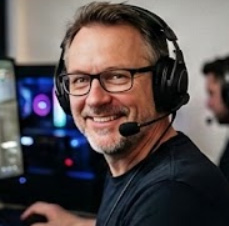
fl0m has been around Counter-Strike for years, but Budapest still managed to surprise him. On the final day of the event, he spent hours at the Monster booth meeting fans from all around the world, signing jerseys and mice, taking photos, and handing out free goodies.
What stood out to him wasn't just the number of people, but the diversity of the crowd. Unlike smaller regional events, this Major felt like a true melting pot of the global CS2 community. Fans flew in from North America, Europe, South America, Asia, and beyond to watch their favorite teams and creators live.
He compared the atmosphere to events back home in Austin, Texas. There, venues are smaller and often packed by default. In Budapest, the scale was on a different level entirely. Watching such a huge arena fill up over the course of the tournament made the growth of CS2 impossible to ignore.
By the time the Grand Final rolled around, the MVM Dome wasn't just full — it was electric. Chants for both Vitality and FaZe echoed around the arena, and every clutch, every opening pick, every missed opportunity was met with a wave of noise.
Vitality vs FaZe: fl0m's conflicted prediction
The Budapest Major Grand Final featured a classic matchup: Team Vitality, one of the most consistent forces in the CS2 era, versus FaZe Clan, a roster that people have written off multiple times only to be proven wrong.
When asked who he thought would take the trophy, fl0m admitted he was torn: his brain said Vitality, but his heart said FaZe. It's a conflict a lot of fans could relate to.
broky's evolution throughout the tournament
One of the standout players for fl0m was Helvijs "broky" Saukants. Early in the tournament, broky reportedly wasn't at 100% and looked far from his usual sharp, composed self. But as the event went on, his level skyrocketed.
By the later stages, broky was back to being the win-condition AWPer that FaZe desperately needs. His impact in tight games, especially in high-pressure playoff moments, reminded everyone why he's considered one of the most dangerous players when he's in form.
FaZe's run from Stage 1
fl0m also highlighted the broader story of FaZe's run. Starting from the earlier stages of the event, FaZe had to grind their way through tough opposition. Many analysts and fans didn't expect them to make it all the way to the Grand Final, but round after round, they adapted and improved.
Players like jcobbb also left a strong impression, stepping up in critical series and showing the depth that modern CS2 teams need if they want to survive a Major run. Watching FaZe evolve over the course of the tournament was, for a lot of viewers, one of the best narratives of Budapest.
Even if Vitality entered as favorites on paper, it was impossible to ignore the momentum and emotional backing behind FaZe. That's exactly why someone like fl0m could logically lean Vitality, yet emotionally lean FaZe.
Valve Regional Standings explained
Beyond the storylines inside the server, Budapest was important because it represented the first fully realized season of CS2 using the Valve Regional Standings as the basis for Major qualification.
What is the Valve Regional Standings system?
The VRS system is Valve's global ranking framework for CS2 esports. Instead of relying on isolated qualifiers and one-off events to decide who deserves a spot at the Majors, VRS tracks team performance over time across numerous tournaments.
Teams earn points based on factors like:
- Match results in sanctioned events.
- Strength of opponents faced.
- Prize pools and event tiers.
- LAN victories and deep playoff runs.
These points then determine how many slots each region gets at the Major and which teams earn those slots. It's a much more holistic approach compared to older systems, where one bad qualifier run could completely derail a strong team's season.
Regional distribution and opportunities
The VRS is split into three main regions:
- Americas
- Europe
- Asia
More VRS points in a region generally translate to more Major slots for that region. That means:
- Regions that perform better collectively are rewarded with more representation at the biggest events.
- Emerging teams can, over time, earn their way into the conversation through consistent performance.
- Organizers and players have clearer goals across the entire calendar, not just during a few qualifier weeks.
For fl0m, this is one of the main reasons CS2 in 2025 feels so lively. The stakes are spread out across the season, not concentrated in a handful of qualifiers.
Early struggles and improvements
The VRS system wasn't perfect from day one. Early on, teams and analysts pointed out flaws, including:
- Delays in updating the rankings.
- Edge cases where teams felt unfairly punished by the formula.
- Confusing scenarios, like questionable forfeits and point allocations.
But over time, Valve refined the system, and the industry learned how to work with it. By the time of the Budapest Major, VRS no longer felt like an experiment; it felt like the backbone of the CS2 competitive structure.
Why CS2 finally feels fully connected
One of the most interesting points fl0m made about CS2 in 2025 is that it finally feels like all the pieces of Counter-Strike are connected. That sense of cohesion comes from multiple layers working together rather than in isolation.
Events, rankings, and regions working together
In the past, it sometimes felt like different parts of the CS ecosystem operated in their own bubbles: some TOs ran their ecosystems, regions had fragmented circuits, and qualification paths were chaotic. With CS2 and Valve's renewed structure, things feel much more aligned.
Here's what has changed for the better:
- Events feed directly into VRS, so tournaments across the year feel meaningful.
- Regions know what they're playing for, with more transparent slot distribution.
- Teams can plan long-term, instead of hopping from one disconnected qualifier to another.
- Fans can follow a clear story through the season, rather than just tuning in for Majors.
For someone like fl0m, who has seen multiple eras of Counter-Strike, this unified feeling is new — and reassuring. He believes there will always be challenges and points of criticism in any esports ecosystem, but from his perspective, the game is in a very strong spot.
Content creators, community, and live events
CS2 isn't just about the pro scene. Creators like fl0m, who balance streaming, competing, and content production, play a huge role in making the ecosystem feel alive.
Budapest highlighted how:
- Creators bridge the gap between hardcore esports fans and more casual players.
- Fan meetups and booths give the community a physical space to connect, not just a Twitch chat.
- In-game content like stickers, autographs, and team capsules help fans bring the Major experience back into their everyday matches.
Combine that with a stable competitive structure and a thriving in-game economy, and you get what fl0m describes as a cohesive ecosystem where everything is linked — from grassroots players all the way up to Major champions.
CS2 skins, the economy, and uuskins.com
No discussion about modern CS2 would be complete without talking about skins. They're more than just cosmetics — they're a core part of the Counter-Strike culture, economy, and identity.
Why skins matter in CS2
Skins have become an extension of how players express themselves and connect to the game. Whether you're queuing for Premier, grinding FACEIT, or watching a Major, skins are everywhere:
- Signature loadouts reflect a player's style and personality.
- High-tier knives and gloves create memorable on-stream moments.
- Team stickers and player autographs link your inventory to esports history.
As CS2 has improved its visuals, lighting, and weapon models, the appeal of clean, well-chosen skins has only grown. Many players who came back for CS2 after taking a break from CS:GO are rediscovering not just the gameplay, but the entire skin economy that powers the scene.
Trading CS2 and CSGO skins safely
Because of how active the market is, players are always looking for safe, convenient ways to buy and sell both cs2 skins and legacy csgo skins. Third-party marketplaces have become a go-to option, especially for people who want better prices, faster transactions, or more control than the Steam Market typically offers.
One example is uuskins.com, a site focused on making the process of trading skins smoother for everyday players:
- You can browse a wide range of cs2 skins across rifles, pistols, knives, and gloves.
- Legacy csgo skins are still supported, letting long-time collectors manage older inventories.
- Market-style listings make it easier to compare float values, patterns, and prices.
As always, players should be smart when dealing with any skin site: use secure browsers, double-check trade links, enable Steam Guard, and avoid logging in through suspicious redirect URLs. But when used properly, marketplaces like uuskins give players more flexibility in how they shape their loadouts.
How skins support the esports ecosystem
Skins don't just benefit individual players — they're critical to the broader esports economy as well. Revenues from esports sticker sales, Major capsules, and team-branded items help:
- Support organizations and players attending Majors.
- Encourage teams to invest in CS2 rosters.
- Keep the competitive circuit financially sustainable.
Every time fans pick up a souvenir package from a Major or equip a sticker from a team that made a historic run, they're adding one more thread to that connected ecosystem. When someone buys cs2 skins or even trades older csgo skins on a marketplace like uuskins.com, it's part of the continuous flow of value around the game.
What's next for CS2 esports after Budapest
The Budapest Major isn't the end of a story — it's the blueprint for what the next few years of CS2 can look like. Massive live crowds, a global ranking system that actually matters, memorable storylines, and a thriving skin economy all point toward a strong future.
Evolving meta and competition
On the server, the CS2 meta will continue to evolve. New utility usage, adjusted maps, and team innovations will keep pushing the game forward. Teams like Vitality, FaZe, and emerging lineups from every region will be racing to stay ahead, using data, coaching, and hours of demo review to build an edge.
With VRS in place, smaller events also matter more than ever. Every upset, every underdog run, and every LAN result can shift the rankings and influence who we see at the next Major.
Community, creators, and player experience
For the broader player base, CS2 is in a sweet spot:
- The game is visually modern while still feeling like Counter-Strike.
- Matchmaking, Premier mode, and third-party platforms give players plenty of ways to compete.
- Creators like fl0m offer educational and entertaining content that helps newer players improve and keeps veterans engaged.
Add in the ability to tailor your arsenal with cs2 skins from sites such as uuskins.com, and you have a game that's easy to sink thousands of hours into without it ever feeling stale.
CS2 as a fully connected ecosystem
When fl0m says CS2 has "brought all the pieces together", he's talking about this entire picture:
- Structured competition through Valve Regional Standings.
- Global Majors that feel like true world championships.
- Creators and fans interacting face-to-face at events like Budapest.
- In-game cosmetics and skins connecting player identities to the pro scene.
For the first time in a long time, it doesn't feel like any one of these aspects is lagging behind. Instead, they're reinforcing each other, making CS2 not just a competitive title, but a living ecosystem that grows with its community.
If Budapest is a sign of what's to come, then CS2 — from the stage to your own inventory — is in a very good place.