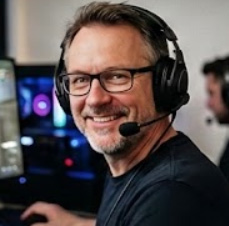
- SHiNE and G2 Ares: A New Era of CS2 Talent
- Adapting from Swedish Stacks to an International Roster
- Why LAN Experience Matters for Young CS2 Players
- How TMKj Changes the Game for G2 Ares
- Inside the IGL‑Coach Dynamic with innersh1ne
- The Mental Game: Rematches and Staying Confident
- Fixing Dust2 and Mirage: Map Pool Challenges
- SHiNE’s Supportive IGL Style and Aleksib Inspiration
- Goals for 2027: Rankings, Deep Runs, and LAN Trophies
- CS2 Skins, Confidence, and Performance on Server
- Practical Tips for Young IGLs and Academy Players
SHiNE and G2 Ares: A New Era of CS2 Talent
Casper “SHiNE” Wennerberg is one of the more interesting in-game leaders rising through the European CS2 scene. After spending most of his career on Swedish lineups, he now captains G2 Ares, the international academy team of G2 Esports. The squad is competing in events like the Hotspawn 10K Showdown, building experience, reputation, and crucially, LAN confidence.
In this interview-based deep dive, we’ll break down SHiNE’s thoughts on:
- What it takes to adapt from a national roster to a mixed-language international team.
- Why LAN events are so important for young academy players.
- The impact of new teammate TMKj and veteran coach innersh1ne.
- How G2 Ares are working through struggles on Dust2 and Mirage.
- His supportive IGL style and why he looks up to Aleksib.
- The team’s ranking and tournament goals heading into 2027.
Along the way, we’ll also connect these lessons to things you can apply in your own CS2 journey—from improving your mental game to optimizing your loadout with smart skin strategies using tools like free csgo skins offers and efficient csgo trading on trusted marketplaces.
Adapting from Swedish Stacks to an International Roster
SHiNE spent the majority of his early career playing on Swedish squads. Moving into an international academy team like G2 Ares is a big step up—in visibility, pressure, and communication demands.
According to him, the biggest adjustment hasn’t been the tactics, but the language and the small culture differences that show up day-to-day in a team environment.
He explains that his personal style of play hasn’t drastically changed. As the IGL, he’s the one setting the tempo and structure, so his identity naturally carries over. What does shift is how fast ideas can be communicated, how jokes land, and how quickly trust is built between players from different countries.
Communication and Culture Changes
In an all-Swedish roster, communication tends to be snappier and more intuitive because everyone shares the same language and cultural shorthand. On an international roster:
- Callouts must be clear, simple, and repeatable.
- Mid-round ideas have to be structured so everyone understands instantly.
- Feedback needs to be delivered carefully to avoid misunderstandings.
For an IGL, this can be a blessing in disguise. You’re forced to refine your calls, be direct, and keep the game plan focused. Over time, that discipline can become a competitive edge.
Lessons You Can Use in Your Own Team
If you’re playing in an international stack on FACEIT, in open qualifiers, or in a mixed stack league, you can steal a page from SHiNE’s approach:
- Agree on simple default terms for positions and tactics.
- Keep mid-round calls to short, actionable phrases.
- Give feedback outside of live rounds so no one tilts mid-game.
- Let your strongest communicator (even if not your star fragger) handle most of the IGL work.
And just like a pro lineup, your own mental comfort matters. That’s why many competitive players put effort into their profiles and inventories as well—from personalized crosshairs to curated skins they obtained via events, drops, or smart use of csgo trading platforms.
Why LAN Experience Matters for Young CS2 Players
G2 Ares have been grinding LAN tournaments like Stake Pulse Beat and the Roman Imperium Cup. For an academy team full of young talent, these events are more than just another line on Liquipedia.
SHiNE puts it simply: every LAN is a good experience when you’re early in your career, and beating “bigger names” onsite can be a massive confidence boost.
Confidence from Beating Bigger Names
Online, it’s easy to tell yourself that a strong result was a fluke, ping abuse, or just an off day for the opponent. On LAN, when you’re sitting across from your opponents, it hits differently:
- You see that top players are human too.
- You prove you can handle the pressure of the stage, admins, and crowd noise.
- Your team builds a shared bank of clutch memories to draw from in future events.
For a young academy roster, stacking these experiences is invaluable. It translates directly into resilience, better comms, and more composure in key rounds.
How LAN Experience Helps Development
SHiNE highlights two key areas of growth from LAN events:
- Experience: Learning how to handle tech pauses, different setups, crowd reactions, and booth conditions.
- Confidence: Knowing that your game style works under the brightest lights, not just in practice or online cups.
These two feed into each other. Confidence makes you more willing to make bold mid-round calls. Experience helps you stay calm when something goes wrong—a delayed start, PC issues, or losing both pistols on your supposed best map.
How You Can Simulate LAN Pressure at Home
Most players won’t get LAN invites overnight, but you can still prepare like a pro:
- Play local online leagues and tournaments with your stack.
- Try webcam scrims, so everyone is visible—it adds mild pressure.
- Set personal goals: clutch % in officials, rating vs stronger teams, etc.
- Take your setup seriously – stable FPS, good peripherals, and a clean UI, including a loadout you’re comfortable with.
Many competitive players also treat their skins as part of their setup. A consistent set of weapon skins they like can make every match feel more “official.” If you’re building out a pistol collection, for example, you can compare and acquire usp skins efficiently using curated markets like csgo trading hubs.
How TMKj Changes the Game for G2 Ares
One of the biggest recent changes in G2 Ares has been the addition of Tiago “TMKj”. Coming in with prior experience from Rebels, he hasn’t just filled a slot—he’s reshaped how rounds feel for the team.
SHiNE describes him as a great aimer and a calm personality. That combination is rare and extremely valuable for a young roster.
Calmness and Firepower in One Player
According to SHiNE, TMKj brings two critical elements:
- Calmness: He doesn’t tilt easily, which spreads stability throughout the team when rounds get chaotic.
- Firepower: His mechanics allow the team to trust him in key duels and anchor roles.
That mix makes calling easier. When your IGL knows a bombsite anchor will win their fair share of duels and won’t crumble under pressure, they can commit to bolder rotations and mid-round gambles.
Adjusting Roles Around a New Teammate
Whenever you bring in a new player with a unique profile, you have to tweak roles and positions. For G2 Ares, this has affected maps like Mirage (where TMKj historically didn’t like the map and even had it as an insta-ban) and Dust2. He’s now taking on key roles, especially on the CT side.
The takeaway for your own teams: when you add a player, don’t just ask, “What spots do you play?” Ask:
- What type of player are you (aggressive, anchor, lurk, supportive)?
- Which positions let you maximize your strengths?
- Which maps do you feel uncomfortable on, and can we develop that over time?
Inside the IGL‑Coach Dynamic with innersh1ne
G2 Ares are also backed by an experienced coach: innersh1ne, known from working with some of the biggest organizations in the CS scene. For SHiNE, the IGL‑coach relationship is a core part of why the team functions well.
He describes their dynamic as normal, healthy, and natural. Both sides listen to each other, and crucially, innersh1ne gives SHiNE and the players the freedom they need to express their style in-game.
Balancing Freedom and Structure
Many teams struggle with the balance between strict systems and player creativity. In G2 Ares:
- The coach helps define overall structure, anti-strats, and preparation.
- SHiNE takes that framework onto the server and keeps mid-round calls flexible.
- Players have room to make individual plays within the system.
That balance is a big part of why the relationship “feels natural” to SHiNE. There’s trust both ways: the coach trusts the IGL’s feel for the game, and the IGL buys into the coach’s structure.
How to Build a Similar Dynamic on Amateur Teams
Even if you don’t have a formal coach, you can imitate this setup:
- Let one person focus more on prep and demo review (your “coach” role).
- Let your IGL own in-game decisions without constant second-guessing.
- Review games together and adjust structure between matches, not mid-round.
This division of responsibilities makes it easier to improve quickly, especially when combined with consistent routines, from warmups to inventory setups and skin preferences that make everyone comfortable in officials.
The Mental Game: Rematches and Staying Confident
In the Hotspawn 10K Showdown, G2 Ares opened against The Last Resort, a team they had already beaten online and at CCT. That kind of rematch can be dangerous: it’s easy to get overconfident or to relax mentally.
SHiNE is aware of this risk. While he says G2 Ares are confident versus these opponents, he emphasizes the need to:
- Stay locked into the mental game.
- Expect the opponent to be hungry for revenge.
- Focus on their own performance, not past results.
Avoiding Complacency After Wins
When you’ve beaten a team twice, it’s tempting to treat the third match as a free win. That’s when upsets happen. SHiNE’s mindset is clear: acknowledge your strength, but don’t let it turn into ego or laziness.
He believes that if G2 Ares keep their mental discipline, they can 2:0 the matchup again. The message for aspiring players is simple—never play on autopilot, especially against teams with a revenge narrative.
Practical Mental Tips for Players
You can adopt similar principles in your own games:
- Treat every official or ranked game as 0‑0 mentally, regardless of past scores.
- Take 30 seconds between maps to reset: breathe, check in with your team, refocus.
- Have a pre-game ritual: aim warmup, a specific playlist, even checking your skin loadout to mentally switch into “match mode.”
Fixing Dust2 and Mirage: Map Pool Challenges
One interesting detail in G2 Ares’s journey is how their map pool has evolved. Statistically, they’ve been struggling on Dust2 and Mirage recently, but the story behind it isn’t as simple as “they’re bad at these maps.”
Dust2: From Powerhouse to Problem Map
Early in the roster’s life, Dust2 was actually one of their best maps. They took wins over higher-ranked teams and felt comfortable on it. Over time, however:
- They changed some positions, disrupting comfort and synergy.
- Results started to slip, leading to negative expectations going into Dust2.
SHiNE doesn’t pinpoint a single tactical issue. Instead, he highlights a mental pattern: going into Dust2 expecting that if they don’t win both pistols or convert early advantages, they’ll have a rough time. That mindset can become a self-fulfilling prophecy.
Mirage: Rebuilding Comfort with TMKj
Mirage used to be one of their most comfortable maps, especially with their former player tAk. With TMKj now in a key CT role and his past teams often insta-banning Mirage, there’s a transition period.
SHiNE believes that on Mirage it’s only a matter of time before the team regains confidence as TMKj gets reps on the map and learns his roles in depth.
How You Can Fix Your Own Map Pool
There are clear lessons here for amateur teams and stacks:
- Don’t instantly drop a map after a few bad results if it used to be a strength.
- Separate role issues (players in wrong spots) from macro issues (bad game plans).
- Recognize when a map problem is mental and address it via review and small wins.
- Give new teammates a structured plan to learn uncomfortable maps over time.
When scrimming, treat weaker maps as an investment: just like building up a valuable inventory via methods such as free csgo skins events and targeted buys, you’re playing the long game rather than chasing only short-term comfort.
SHiNE’s Supportive IGL Style and Aleksib Inspiration
Not every IGL is a hard entry fragger or a pure lurker. SHiNE describes himself as a supportive IGL who can still take space when needed—especially in mid-to-late-round situations.
In his previous Swedish teams, his pattern was often:
- Start the round by supporting teammates – throwing utility, setting up plays, creating space for star players.
- End the round by going in first in the final execute or retake.
In G2 Ares, he notes that he’s even more support-focused throughout rounds, prioritizing enabling his teammates to shine (no pun intended).
Aleksib as an IGL Role Model
When asked which player he models his game after, SHiNE points to Aleksib – another IGL known for a supportive style, heavy utility usage, and a “glue guy” role rather than a consistent hard-carry.
This doesn’t mean low impact. Supportive IGLs shape the round, make decisive calls, win space in key moments, and ensure that their team’s strongest riflers and AWPers are put in the best positions to succeed.
How to Develop a Supportive IGL Playstyle
If you want to emulate this style in your own games:
- Learn essential utility lineups on all your core maps.
- Prioritize information plays over dry peeks.
- Talk constantly: timings, enemy economy, tendencies, utility tracking.
- Be willing to play the "unsexy" roles that allow your carries to pop off.
This mindset applies even down to things like inventory choices. Some IGLs prefer clean, minimal skins—others like flashy knives or distinctive usp skins to keep their pistol rounds feeling special. If you’re building a supporting-IGL identity, consolidating a consistent loadout via smart csgo trading can help your in-game persona feel more stable and recognizable.
Goals for 2027: Rankings, Deep Runs, and LAN Trophies
Looking ahead to 2027, SHiNE has clear, grounded goals for himself and G2 Ares.
On the ranking side, he’d like the team to reach somewhere around rank 70‑60 by next summer, factoring in the time it takes to gather LAN points and adjust to roster changes.
Beyond ranking, the team is hungry for concrete achievements:
- Make a deep run in a CCT event.
- Secure a LAN title at a suitable-tier tournament.
These goals are realistic but ambitious, especially for an academy roster that’s still ironing out map pool issues and integrating a new player in a key CT role.
Setting Realistic Goals as a Player
You can apply a similar framework in your own CS2 grind:
- Set rating or winrate targets for each season on FACEIT or in leagues.
- Pick one or two tournaments where your goal is to reach playoffs instead of “win everything.”
- Define milestones for map pool expansion and role improvements.
And if you’re also building out your CS2 inventory, treat it as a long-term project. Just like climbing the ladder, stacking value via free csgo skins campaigns and strategic upgrades can, over time, turn a budget inventory into something you’re proud to bring into officials.
CS2 Skins, Confidence, and Performance on Server
While SHiNE’s focus is clearly on competition and team development, there’s another layer many players care about: skins and inventory personalization. A polished loadout doesn’t make you a better aimer, but it can affect how you feel in-game—and that matters more than many players admit.
Why Skins Matter to Competitive Players
For many serious players, skins are part of their identity:
- They make your weapons instantly recognizable in clips and VODs.
- They help you mentally separate your "serious" matches from casual warmups.
- They can be a way to reward yourself after hitting a personal goal, like a new ELO peak or tournament run.
Pro players are often seen with distinctive knives, gloves, and especially pistols. A clean, high-contrast USP skin can make your CT pistol feel more locked-in and satisfying, especially when it’s a piece you deliberately chose instead of a random drop.
Building a Skins Collection the Smart Way
If you want to upgrade your loadout without wasting money, a few principles help:
- Start with high-usage weapons first (AK, M4, AWP, USP, Glock, preferred rifle).
- Use platforms that combine rewards and trading, so your collection grows over time.
- Explore offers like free csgo skins to build initial value before making bigger trades.
- When you’re ready to upgrade, use flexible markets like csgo trading to search, compare, and swap into better items, including specific usp skins that match your style.
Over time, you can curate a loadout that feels uniquely yours. Just like G2 Ares are shaping their team identity under SHiNE, you’re shaping your own in-game presence—mechanically, mentally, and visually.
Practical Tips for Young IGLs and Academy Players
SHiNE’s journey with G2 Ares and his views on LANs, coaching, and roles offer a lot of insight for anyone who wants to become an IGL or climb into academy-level competition. Here’s a distilled set of lessons inspired by his experience:
Developing as an IGL
- Refine your communication: especially if you’re playing in international stacks. Aim for clarity, not speed.
- Study other IGLs: watch how players like Aleksib structure rounds and use utility.
- Own your style: whether you’re supportive like SHiNE or more aggressive, build a consistent identity your team can rely on.
Maximizing LAN and Tournament Experience
- Treat every event as a learning opportunity, not just a result.
- Take notes after events: what worked, what failed, how your mental state changed.
- Use small wins—LAN upsets, solid map performances—as confidence fuel for future tournaments.
Building a Professional Mindset
- Set clear, realistic goals like G2 Ares do for 2027 rankings and LAN aspirations.
- Don’t let short-term losses redefine your long-term identity as a team.
- Take care of details: warmups, review routines, roles, and yes, your in-game setup (crosshair, viewmodel, and inventory).
Whether you’re grinding open qualifiers, working your way into an academy team, or just trying to be the best player in your local community, the mindset SHiNE shows with G2 Ares is a strong template: embrace international challenges, seek out LANs, trust your teammates, and never stop refining the small edges that separate good teams from great ones.
And if part of your personal edge is stepping onto the server with a clean, dialed-in skin loadout, platforms that combine reward systems like free csgo skins with robust markets for csgo trading and picking out your ideal usp skins can help you level up your look alongside your gameplay.